Tuesday, April 10, 2012

Grand Hotel by Vicki Baum
Doubleday Press, 302 pages.

Long out of print (even the reprint is out of print), Vicki Baum's Grand Hotel is mostly forgotten except to librarians, famed only to lovers of old films (two versions were made) and musicals (a Tommy Tune directed version swept Broadway in 1989). The novel itself seems to have been swept from our cultural memory and this is unfortunate: it remains a tightly conceived story of six disparate characters and the way their fates intertwine over the course of two days at the eponymous hotel. Both story and prose (translated by Basil Creighton) survive the ages and in some cases remain surprisingly relevant - most especially in the story of Preysing, the manager of a company, who is faced with the decision of whether or not to succumb to dishonest business practices just to make a buck.

Sunday, March 25, 2012

An Improvised Life: A Memoir
by Alan Arkin
Da Capo Press, 201 pages.

Alan Arkin, if you believe his father, knew he was going to be an actor at the age of five, a fact which would seem to belie the title of his book: despite his claims, there's the distinct sense that his professional life went more or less according to plan. An award-winning actor and director, Arkin is best known today for playing old curmudgeons, such as in Little Miss Sunshine and The Change-Up (he also has a cameo in The Muppets). But he's appeared in over 80 films and has a theatrical track record that most actors would with envy. No doubt about it, Arkin's life doesn't truly seemed to have been improvised at all: he made a plan when he was five and stuck to it. Or at least that's how it seems in An Improvised Life, which skips over almost all of Arkin's personal struggles and focuses entirely on his philosophies on acting and a life in the arts. It's an enjoyable read if you're an artist; anyone else, I suspect, will find it (amazingly) lacks drama.

Saturday, March 17, 2012

Priceless
How I Went Undercover to Rescue the World's Stolen Treasures
Robert K. Wittman with John Shiffman
Crown Publishers, 324 pages.

A book that should be coming soon to a TV screen near you, Priceless is a fearless memoir that is begging for adaptation - and authors Robert Wittman and John Shiffman have even provided writers with at least twelve episodes for the first season. The story of the founder of the FBI Art Crime Team, Priceless succeeds as both crime drama and personal memoir, with Wittman emerging as the classic hero driven by a need for personal redemption. It also serves as a passionate celebration of art and its place in human culture.

Saturday, March 10, 2012

Frank
The Story of Frances Folsom Cleveland, America's Youngest First Lady
by Annette Dunlap
Excelsior Editions, 2009. 195 pages.

More an extended encyclopedia entry then a comprehensive biography, Annette Dunlap's survey of the life of America's youngest first lady sketches the life of an intriguing figure without ever going too far below the surface. Frances "Frank" Cleveland is a barely remembered First Lady, overshadowed by the tragic glamor of Jacqueline Kennedy, the social activism of Eleanor Roosevelt and even the lunacy of Mary Todd Lincoln. But Frank married Cleveland in more ways then one and as his second term was considered a failure best forgotten, so too has Frank beenexiled from thought. Some historians have tried to rehabilitate Cleveland's reputation recently, so its not surprising that Frank would be resurrected as well. Dunlap herself clearly hopes to champion Frank but her polite narrative is far too brief to ever allow the reader a chance to form their own opinion.

Sunday, March 4, 2012

Tension City:
Inside the Presidential Debates, from Kennedy-Nixon to Obama-McCain
by Jim Lehrer
Random House, New York, 2011. pp 209.

Given that Jim Lehrer has had a front row seat to eleven U.S. presidential debates, you wouldn't be wrong to expect more from Tension City, a slim volume that works as an appetizer when it should have been a meal. The metaphor is apt since, like a good croquette, Tension City is easy to digest and possible to finish in a single sitting. As a man who had a worm's eye view of some significant political moments, Lehrer had the opportunity to supply some deft political analysis, both on the art of debating and the evolution of the televised debate from political confrontation to its current form as orchestrated entertainment. Instead, Lehrer seems content to supply anecdotes and only a few juicy facts as he gives us a whirlwind tour across fifty years of debating history.

Thursday, February 23, 2012

Cognition in the Globe: Attention and Memory in Shakespeare’s Theatre
by Evelyn B. Tribble
Palgrave MacMillian. New York, 2011. 200 pp.

Theatre practitioners accustomed to dramatic analysis of Shakespeare’s work – what does Macbeth want? how to stage the moving of Birnam Wood? – have a fascinating new viewpoint in Evelyn Tribble’s Cognition in the Globe, one of the more recent additions to Palgrave’s series Cognitive Studies in Literature and Performance. In concerning herself with the question of how early theatre companies carried the mnemonic load associated with performing several new plays a month, Tribble has created a treatise that sheds light on the historic even as it provides new insights to those producing theatre today.

Sunday, February 19, 2012

Destiny of the Republic
A Tale of Madness, Medicine and Murder of a President
by Candice Millard. Doubleday, 340 pages.

At once an engaging piece of Americana and an exploration of the frightening world of 19th century medicine, Candice Millard's re-telling of the assassination of President James Garfield explores the story from more than a few surprising angles. Others have chartered this course before (see Kenneth Ackerman's 2004's Dark Horse, discussed here) but Millard stakes her claim on the subject by framing her narrative around several characters whose place in the story has heretofore been as members of the supporting cast.

Saturday, February 11, 2012

Out of Oz 
by Gregory Maguire
Harper Collins, 563 pages.

!!  This review contains spoilers  !!

Although one has to credit Gregory Maguire for his imagination, devotion and skill - his brains, heart and courage, as it were - it would be a tough job to recommend Out of Oz to anyone but the most devoted fans. The book is the final volume of a massive reworking of the Oz mythology dubbed The Wicked Years, a long, complicated saga about war, politics and love that have earned Maguire comparisons to J.R.R. Tolkien, Robert Jordan and other creators of the sprawling fantasia. But Out of Oz, more than any of the three books that came before it, seems to strain under Maguire's literary efforts. Everything is a little too labored, especially the narrative, which is a meandering timeline of events that spans the years but leaves the characters themselves lost in its wake.

Thursday, January 12, 2012

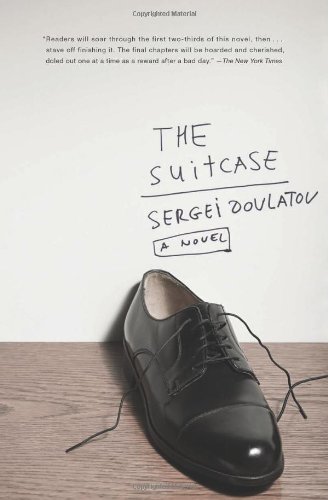
The Suitcase by Sergei Dovlatov 
Counterpoint Press, 136 pages.

The government of the Soviet Union (1922 - 1991) produced an army of disasters in their day, but no one can ever fault them for giving us Sergei Dovlatov. Born just after the Nazis invaded Mother Russia, Dovltaov would survive the war and go on to be a soldier, prison guard and journalist before escaping to the United States. Anticipating "creative non-fiction" years before the term was ever invented, Dovlatov wrote in a terse, comical style in the voice of a narrator created in his own image. The Suitcase is no exception. A wry collection of short stories about a Russian named Sergei - who was once a prison guard, worked as a journalist and emigrated to the States - The Suitcase merrily blurs the genres to create a work that is entirely unique.

Saturday, December 31, 2011

One Year, One Hundred Books

Sometime around January 1, 2011, I stumbled upon one of those sites where readers had challenged each other to read a hundred books throughout the year. It seemed ridiculously easy at the time, but in fact I almost didn't make it. This has everything to do with my penchant for picking up fat biographies and even fatter books on American History. Early on, I knew I'd have to set some arbitrary ground rules: graphic novels would be acceptable but cookbooks were a sin. So while I can report it wasn't all heavy tomes whose weight broke my Kindle's back, I have to admit I only finished the last book on December 30 at around four o'clock. You can see the full list here.

Friday, December 9, 2011

The Sense of an Ending
Julian Barnes. Random House, 150pp.

Even if I hadn't enjoyed this book as much as I did, I still would have been thrilled that Julian Barnes had claimed the 2011 Man Booker Prize. An author with an eclectic body of work, I view the success more as a nod towards his career then any singular work. This isn't to say The Sense of An Ending isn't a good read, merely that Mr. Barnes' ouevre has been so impressive that it's pretty scandalous he hasn't won already. Here, he gives us a  book so subtle that it doesn't immediately scream "award". It's not a sprawling fictional biography of Thomas More (see Wolf Hall) or as structurally ambitious as, say, The Blind Assassin (which won in 2000). Don't come to this book looking for smoke and mirrors. There are few obvious tricks to dazzle you; it is, to quote one reviewer, "a work of art, in a minor key".

Sunday, December 4, 2011

Emma Goldman: An Intimate Life (Pantheon Books)
and
Emma Goldman In Exile (Beacon Press)
by Alice Wexler.

Not officially a two volume set, both Emma Goldman: An Intimate Life and Emma Goldman In Exile are well-researched biographies of the two halves of the famed anarchist's life: B.E. (Before Exile) and A.E. (I'll leave you guess what this stands for). Sent packing from the U.S. after years of anti-government rhetoric, Emma Goldman spent the last twenty years of her life yearning for what she did during the first forty. Or at least, this is the inherent implication in Ms. Wexler's books, which cut a definitive line down the middle of Emma Goldman's life. Ms. Wexler is not in love with Emma Goldman, which makes her an ideal author to conduct this study: there are no rose tinted glasses here, and both books are thoroug, sometimes critical examination of Emma, her politics and the world in which she tried to implement them.

Monday, November 14, 2011

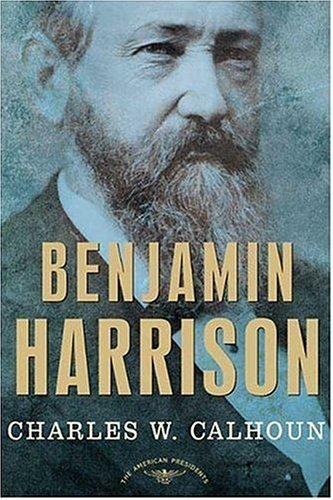
Benjamin Harrison 
by Charles W Calhoun. Times Books, 206 pages.

The latest in my ongoing effort to study America through the lens of presidential biographies, Charles W. Calhoun's Benjamin Harrison manages the amazing act of being as informative as a Wikipedia article without actually revealing all that much about its subject. This may be a result of the scope of the book - it's part of The American President's Series, edited by Arthur M. Schlessinger Jr, and it's probable that the author was working towards a specific word count. But whatever the reason, this is hardly the most comprehensive look at the life of the 23rd President (that honor resides with the 3 volume opus by Harry J. Sievers). This isn't necessarily a bad thing; but the book succeeds in revealing very little about Benjamin Harrison himself. This is a political biography, focused entirely on Harrison's professional actions, rather then his personal life. This sadly contradicts the aim of the American President series which, according to Mr. Schlessinger is to remind us of the humanity behind America's leaders.

Wednesday, November 9, 2011

Moneyball: The Art of Winning an Unfair Game
by Michael Lewis. W.W. Norton and Co. 286 pages.
vs.
Moneyball
directed by Michael Bennett. Columbia Pictures. 133 min.

Comparing a book to its filmed version is a dangerous pastime: cinema and print are two different mediums and require different storytelling skills. One is visual, the other cerebral. Those that realize this invariably make good films - they steal the book's plot and maybe some of the dialogue, but otherwise they're wise enough to leave the book on the shelf. Moneyball is one such film. Written by Steven Zallian and Aaron Sorkin, Moneyball the movie is a taut character drama of a man against the world. Michael Lewis' book, on the other hand, is a far more complex expose of baseball's underworld and the personas behind both the players and those who put them on the film. Book and film are two different entities that have sprung from the same tree: the closest analogy one could give is that they are a pair of successful fraternal twins.

Saturday, November 5, 2011

Saturday by Ian McEwan.
Jonathan Cape, 279 pages.   

Ian McEwan has made a career putting the literary in literary fiction, but with Saturday he outdoes even himself. A novel that manages to be both dense and quiet, Saturday takes us slowly - very slowly - through a day in the life neurosurgeon Henry Perowne, allowing Mr. McEwan to revel in the mundane. Even the act of urinating deserves a paragraph of its own, which may be all you need to know in order to decide if Saturday is for you. Make no mistake: this is an exquisite book that reveals both the poetry and the disquiet in he most mundane of things. But Mr. McEwan is in no hurry to get to his point. Like The Comfort of Strangers, a much earlier novel, this is a book which almost imperceptibly pushes its characters towards an unforseen and startling climax.