Friday, May 13, 2011


The Particular Sadness of Lemon Cake
Aimee Bender, Doubleday, 292 Pages

A whimsical coming-of-age story, The Particular Sadness of Lemon Cake attempts to do in novel form what Aimee Bender has almost perfected in her short stories: marry our reality with another as a means of exploring the human tragicomedy. She is mostly successful, although I can't say Lemon Cake has the same sharpness of her shorter works. For all its cleverness and beauty, the novel is not nearly as focused in its narrative scope.


Sunday, May 1, 2011

For Whom the Bell Tolls
by Ernest Hemingway, Scribner, 471 pages

Is there anything that can be sad about this book or its author that has not already been said? One of the classic novels of the modern age, For Whom the Bell Tolls is definitely quintessential Hemingway, one of his last major works (not counting the work published posthumously, it would be followed only by Across the River and Into the Trees and The Old Man and the Sea.) By now, Papa Hemingway had clearly perfected his own inimitable style, that magnificent simplicity that so many have either envied or loathed.  And thematically, Papa Hemingway is in his usual territory of large ideas: the fine lines between courage and cowardice, between loyalty and betrayal.

Thursday, April 14, 2011

The Pat Hobby Stories by F. Scott Fitzgerald
Penguin Books, 1967. 167 pages.

A surprisingly engaging collection of 17 short stories, F. Scott Fitzgerald's collection proves an engaging homage to the old adage about brevity and wit. Set entirely in the Hollywood of 1940, the collection revolves around Pat Hobby, the eternally down-on-his-luck screenwriter, a has been who's always a dime away from bankruptcy and a good idea away from eternal happiness. Not a story in this collection can be more then 2000 words and yet each manages to build the sort of comic-tragic world that Fitzgerald always adored.

Monday, April 11, 2011

Lucky Man by Michael J. Fox
Audio Book, 5 1/2 hours (approx.) Read by the Author

If there is such a thing as the quintessential memoir, then it's Lucky Man. Putting aside Mr. Fox's great celebrity, Lucky Man is the story of a man's rise to greatness, his risk of destruction from hubris and his salvation through a newfound devotion to family and to the larger community. It is essentially a story of redemption, told by a man I did not think needed to be redeemed. For this reason, Lucky Man came as a pleasent surprise and ranks with the best celebrity memoirs, along with Katharine Hepburn's Me and Moss Hart's Act One.

Thursday, March 31, 2011

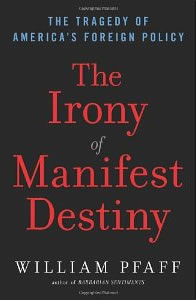
The Irony of Manifest Destiny
by William Pfaff. Walker and Company, 222 pages.

William Pfaff's dissection of American foreign policy is a compact examination that focuses on both the political and religious motivations behind America's involvement in International conflicts. One is tempted to say that it's a timely read, but with America now involved in a pseudo-war with Libya, it feels as if Mr. Pfaff's book will also have some modern relevance. It's unfortunate, then, that Mr. Pfaff's style is not always as succinct as his ideas. Although his ideas are sound, there are times when he becomes so verbose that his thoughts are lost within the density of his own prose.

Thursday, March 24, 2011

The History of Love by Nicole Krauss
W.W. Norton and Co. 254 pages.

A novel that puts the literary into literary fiction, "The History of Love" assaults you with its originality. Author Nicole Krauss toyed with chronology, structure and standard page formatting in crafting this post-modern book about a book (called, naturally, "The History of Love"). In doing so, she succeeded in getting everyone's attention (it was nominated for an Orange Prize, among others). There is definitely much to admire in Krauss' book and it almost demands a second reading. Yet at times, it feels like she was trying just a little too hard to be quirky and daring. Put another way, there were plenty of moments when it was a little too obvious that the artist was in the room.

Saturday, March 19, 2011

O Henry Awards: Prize Stories 1962
Doubleday and Company, 250 pages

Reading short stories that are almost fifty years old is a nice form of literary time travel: as a genre, the short story tends to favor the modern era and so this collection of fifteen stories gives a pretty good glimpse into a lost world, one that not even the best season of Mad Men has quite been able to touch. The politics and social concerns of the entire era run as an undercurrent to these stories, whether its racism in John Updike's The Doctor's Wife or Cold War relations in Tom Cole's Familiar Usage in Leningrad.

Thursday, March 17, 2011

Wednesday, March 16, 2011

Fosca by Igino Ugo Tarchetti
Translated by Lawrence Venuti
Classic Books, 154 Pages

As a fan of the Sondheim musical Passion, it has long been a desire to read the book that inspired the show. A classic of Italian literature, Tarchetti's Fosca was originally a satirical novel written as a form of scapigliatura, a19th century Italian artistic movement which rebelled against convention. In chronicling the amorous affairs between the soldier Giorgio, the married Clara and the ugly Fosca, Tarchetti presented several passions which would have been considered gravely immoral at the time of writing. 

Wednesday, March 9, 2011

Fine and Dandy: The Life and Works of Kay Swift
by Vicki Ohl, Yale University Press, 294 Pages

A rich melancholy pervades the pages of Ohl's extensive biography of Broadway's first female composer. For those fans of George Gershwin, Kay Swift's name is a popular one - she was his personal secretary / paramour and it's likely they might have married if he hadn't died of a brain tumor in 1937. But Kay Swift was also a multi-talented composer, lyricist and author who has the distinction of being the first female composer to have a musical comedy ("Fine and Dandy") on the Great White Way. 

Saturday, February 26, 2011

Sons and Lovers
by D.H. Lawrence (Woodsworth Editions, 369 pages)

D.H. Lawrence's third novel clearly sets the page for the themes he would explore in later work, most obviously the controversial Lady Chatterley's Lover. A novel that resounds with melancholy, Sons and Lovers is written in the epic mode and largely concerns the struggles of the Morel family in early 20th century England. The central figure is Paul, a stand-in for Lawrence himself, and the novel's focus on Paul's early love affairs apparently also have echos of the author's own early adventures.

Sunday, February 20, 2011

Next by Michael Crichton
Harper Collins, 431 pages

It would be a monumental task to give an adequate synopsis of Next, the last of Mr. Crichton's works published within his lifetime. Like the human genome, the subject of the book, this book is a labyrinth, with an elaborate list of character and plot threads. It exists in a world where various individuals and corporations fight to interpret, patent and exploit our genes. Their attempts lead to both comic and frightening results, from creating parrots who can hold down conversations to pursuing patients whose cells have been legally declared someone else's property.

Sunday, February 13, 2011

The Brief History of the Dead
by Kevin Brockmeier, Pantheon Books, 252 pages

I first encountered "Brief History" as an O. Henry Prize winning short story (in 2005). It was a mesmerizing piece, elegent and eerie and easily the best in the collection. Both the short story and the novel use the same premise as a starting point, namely the belief of several African societies concerning the dead. Simply put, this belief states that the dead exist in a ghostly state of limbo only so long as there are people who remember them. Only when they are forgotten do they pass into the great beyond.

Monday, February 7, 2011

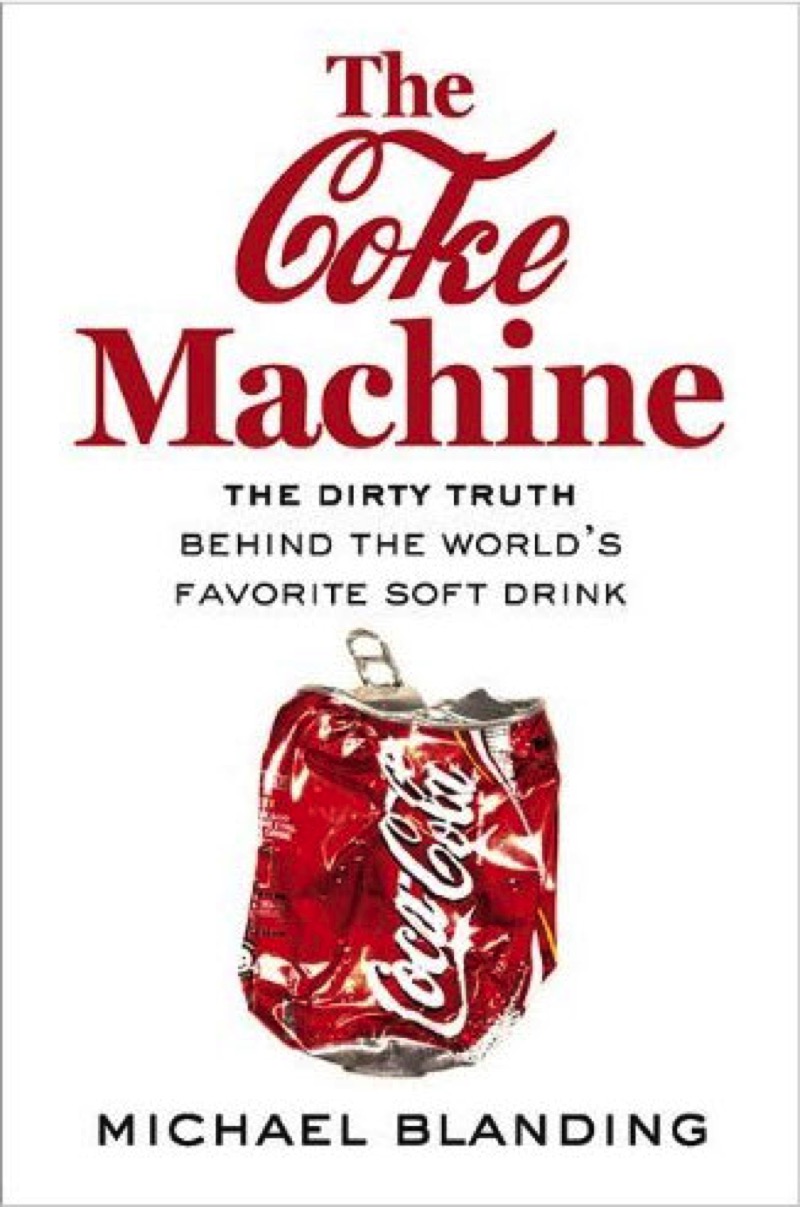
The Coke Machine by Michael Blanding
Penguin, 375 pages

Early on in The Coke Machine, Michael Blanding's scathing expose about the ubiquitous soft drink, we learn that the book was written without the Coca-Cola Corporation's co-operation. In an email to the author, Coke spokeswoman Kerry Kerr wrote that the company had decided Blanding's questions for the corporation had a "decidedly subjective slant". It's impressive that Mr. Blanding chose to include this remark on Page 21, as it immediately sets off an alarm in the reader's head: is the book subjective? Will the other 354 pages of this book be the result of some personal vendetta against an innocent soft drink that only wanted to teach the world to sing?

Thursday, February 3, 2011

Let's Applaud New South Books for their Honesty!

With the media whirlwind surrounding New South Books and their bowdlerized edition of Huckleberry Finn, censorship has been a hot topic for bloggers and tweeters. It’s an important debate, of course, but in this case, the debaters have entirely missed the point. The true surprise about the controversy is not that the publishers altered Mark Twain’s work  - it’s that they told us they had done it.

Read the full article at  http://charpo.blogspot.com/2011/02/ideas-joel-fishbane.html