Wednesday, September 28, 2011

Paris Was Yesterday
by Janet Flanner. Harvest / HBJ. 232 pages.

It's tempting to want to write about Janet Flanner the way she wrote about Paris, but I hope I'm wise enough to know that I'd die from the effort. Ms. Flanner's exquisite prose was a staple of the New Yorker for almost fifty years, writing dispatches from Paris that provided a glimpse into France's artistic, social and political scene. Paris Was Yesterday is a collection of these letters spanning most of the interwar years, from 1925 - 1939, and it's a work almost without peer. As a stylist, Janet Flanner is a marvel while her perceptive and wry take on all subjects, be it Ulysses or Hitler, makes for an engaging read.

Monday, September 26, 2011

State of Fear
by Michael Crichton, Harper Collins. 602 pages.

Is it possible that Michael Crichton, of all people, is this generation's George Bernard Shaw? It's not the most common comparison, but hear me out. Shaw was a social critic whose plays were written to discuss a particular social ill: prostitution (Mrs. Warren's Profession) or the exploitation of the underprivileged (Widower's House). At the same time, he wrote entertainments (he called them "Pleasent Plays"), some of which proved to be his most enduring work (see Pygmalion, the basis for My Fair Lady). Cut to Mr. Crichton who, like Shaw, isn't afraid to put his opinion in a preface or afterword. His canon is also a mixture of popular entertainments (Jurassic Park, The Great Train Robbery) mixed with books which have a more political purpose - abortion (A Case of Need), genetic engineering (Next) and, as is the case with State of Fear, global warming. To Mr. Crichton, global warming is a social ill that needs to be addressed: he is, at best, skeptical of the science behind climate change, a fact which made this book controversial after it's release in 2004 and continues to be touted by those who believe climate change to be a hoax.

Thursday, September 22, 2011

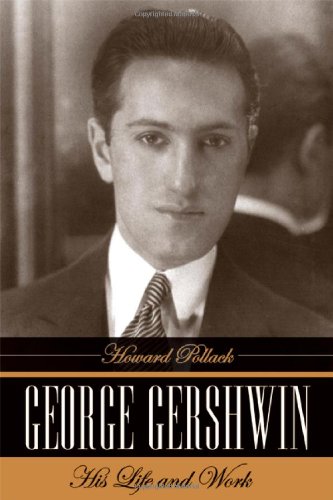
George Gershwin: His Life and Work
by Howard Pollack. University of California Press, 884 Pages (!!!)

Howard Pollack's enormous biography of American composer George Gershwin and his work might be better termed an encyclopedia: it not only dives into the composer's life, but also lists the history of his numerous songs, compositions and shows, complete with synopses, cast lists and four whole chapters (nearly 100 pages) devoted to the monumental Porgy and Bess. Having read almost every Gershwin biography to date, I can attest that Mr. Pollack's is both the most exhaustive and the least readable. It's a work of great significance and yet I would hardly recommend it to anyone but the most devoted Gershwin fan. Someone with a smattering of musicology would also be a plus, since Mr. Pollack isn't afraid to dive into the technical aspects of Gershwin's music, comparing individual pieces to other works in the Gershwin canon and Gershwin's contemporaries.

Wednesday, September 7, 2011

I Am Mary Dunne 
by Brian Moore. Penguin, 187 pages.

All literary affairs - like all love in general, I suppose - happen at different speeds. Sarah Vowell hit me like a ton of bricks, but Brian Moore came up quietly beside me, gently poking me in the ribs each time I walked into a book store. "Remember Brian Moore?" he says. "Remember how much you liked the last book?" And so I buy another of his books and then another. I Am Mary Dunne, written in 1968, is the sixth novel by Mr. Moore that I've read and I'm sorry to say that it's taken this long for me to realize that he and I are definitely having a literary affair. That Mary Dunne has cemented this realization is probably a testament to the book itself, which seems as quiet and unassuming as its title character. The book, like its heroine, is something easily passed by on your way to flashier things. But this would be a mistake, for both are filled with tragedy as heartbreaking as it is quiet.

Friday, September 2, 2011

Gentleman Boss: the Life of Chester A. Arthur
by Thomas Reeves. Knopf, 500 pages.

More an exhaustive overview of Gilded-Age U.S. politics then an actual biography, Gentleman Boss remains one of the few books to focus on America's forgotten 21rst president (he's so forgotten that he didn't even make it into the Simpson's classic "Mediocre Presidents" song). Chester "Chet" Arthur should have been an even more forgettable Vice-President, but Charles Guiteau changed that in 1881, killing President Garfield and altering Arthur's fate forever. Thomas Reeves makes a valiant effort to rehabilitate Arthur and for the most part he succeeds, although even he admits that Arthur might have achieved immortality if he had only been the bad President everyone expected him to me. Instead, he truly fulfilled the title of "caretaker President".

Monday, August 29, 2011

2030 by Albert Brooks
St Martin's Press, 375 pages.

It's too bad that the late Michael Crichton never got to write 2030, because in his hands it might have been a great book. Crichton was a genius at marrying an epic cast of characters with complicated exposition, all wrapped into a tense dramatic scenario - look at The Andromeda Strain, Jurassic Park or more recently, Next. Next (reviewed elsewhere) is perhaps the closest ancestor to 2030, as both take on clinical tones to discuss the not-so-distant future. But Next ends up being far more sinister in its implications. In the hands of filmmaker Albert Brooks, 2030 actually comes across as rather benign. Perhaps it's because the author's cinematic instincts are so much more honed then his literary ones: 2030 is dialogue heavy and the narration is short, brief and always to the point. Major events - earthquakes, deaths, China buying Los Angeles - all happen in the blink of an eye without any real attention paid to the drama of the moment. The entire novel reads like a treatment for a film that never got written.

Thursday, August 18, 2011

Various Positions
by Martha Schabas, Doubleday. 361 pages.

Being a former theatre school brat, I couldn't help but be drawn to Various Positions, an affecting first novel by Martha Schabas that deals with adolescence, broken homes and the fact that when you're dealing with the artistic world, the "rules do not apply". This, at least, is the conclusion reached by Georgia Slade, Ms. Schabas' engrossing main character, who is accepted to the Royal Toronto Ballet Academy and promptly begins both an artistic and sexual awakening. A bit of Black Swan meets Fame, Various Positions took me back to my own days in dance school and successfully captured the tense student rivalry and unfortunate eating disorders that are the undercurrent of any artistic training. 

Monday, August 15, 2011

Bossypants
by Tina Fey, Reagan Arthur Books. 275 pages.

Like Kristi Koruna, the object of a ten year crush that lasted until I was 18, Tina Fey always manages to prompt a series of sweaty palms, giddiness and a complete inability to articulate my own thoughts. In Ms. Fey's case, however, this is a purely artistic crush. I usually respond to an episode of 30 Rock with the same sweaty-palmed uncertainty that happened whenever Kristi Koruna walked into the room: in other words, if my life was a summer camp social (and sometimes I think it is) Tina Fey's work is the girl I want to dance with to Stairway to Heaven. I probably won't ever get asked to write an episode of 30 Rock (mostly because I'd just screw it up), so I suspect that writing about Bossypants is as close as I'll ever come to dancing with Ms. Fey's talent.

Thursday, August 11, 2011

Robert Todd Lincoln: A Man in His Own Right
by John S. Goff
University of Oklahoma Press, 286 Pages. 

You know you're a history geek when you're reading a book about Robert Todd Lincoln - especially one written by John S. Goff. Written in 1968, this is a polite  look at a statesman who most people know nothing about, a fact as true now as it was forty years ago. A millionaire businessman of the Progressive era, Lincoln also did his duty in American politics, serving first as Secretary of War and then as Minister to England. He was associated with three assassinated Presidents at the time they were shot, a distinction that led him to say of his many White House invitations: "If only they knew, they wouldn't want me there." His name was bandied about in several Presidential races and, as Special Counsel for the Pullman Palace Car Company, he may or may not have been influential in putting down the famed Pullman strike of 1894. Oh, and he was the son of Abraham Lincoln. Can't forget that - especially since no one else did.

Monday, August 1, 2011

The Memory of All That:
George Gershwin, Kay Swift and my Family's Legacy of Infidelities
by Katharine Weber
Crown Publishers, 270 pages.

An unusual memoir penned by novelist Katharine Weber, The Memory of All That is essentially two books in one: the first concerns Mrs. Weber's relationship with her enigmatic father, the inimitible Sydney Kaufman who disappeared from the house for months at a time, worked in the movies, was either loved or reviled by his contemporaries and has a FBI file that corresponds with the career of J. Edgar Hoover. The other is largely an anecdotal biography of Mrs. Weber's grandmother, Kay Swift, who is remembered either as the first woman to have a musical on Broadway or George Gershwin's longtime paramour (sadly few people, I've found, seem to remember her as both). Despite my own Gershwin-mania, it's the novel's first half that made for a much more invigorating read; although of academic interest, the second half was less focused. For a hundred pages, Mrs. Weber fights an intriguing battle to understand her peculiar father; but she was so close to her grandmother and much of the second half is, to use Kay Swift's own word, mumpsy.

Monday, July 25, 2011

Dark Horse: The Surprise Election and Political Murder of James A. Garfield
by Kenneth Ackerman
Carroll & Graf, 551 pages.

A book that should be required reading for anyone aspiring to a life in politics, Dark Horse is a surprisingly engaging historical epic that reads like a novel even as it delves into an under-appreciated turning point in 19th century Americana. Set in the stormy political years of 1880 - 1881, the book charts the rise of President James Garfield and sets about proving the thesis that his death by an assassin's bullet was as much a result of the era's political atmosphere as it was the assassin's own shattered ideals. If this idea sounds familiar, it should; it was the same one put forth this year after Jared Loughner's shooting spree in Arizona and it's just started again in the wake of Anders Behring Breivik's shootings in Norway: in both cases, a charged political atmosphere prompted disturbed people to take disturbing action. And this is just one of the eerie points of relevance between Dark Horse and the modern day: as we gear up for the 2012 Presidential election and the Republican National Convention, Mr. Ackerman's detailed portrayal of the 1880 convention - and the backroom deals that went along with it - will be of special interest.

Wednesday, July 20, 2011

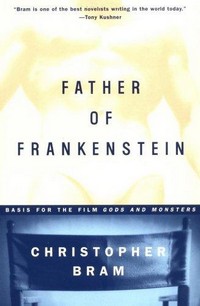
Father of Frankenstein
by Christopher Baum. Plume, 276 pages.

Like author Peter Straub, I read most of this book in one sitting, a true compliment considering how restless one can get on a hot summer day. Reading this book so soon after Doctorow's Homer and Langley, I couldn't help but draw parallels, not because of the subject matter, but because both books create fictional versions of history that are true to the spirit of people involved if not the actual facts. Here, Mr. Baum's focus is the final days of James Whale, best remembered as the director of Frankenstien, who drowned himself in his Hollywood swimming pool in 1957. History is unapologetically subverted as Mr. Baum creates a tryptych of characters that are both wildly comical and deeply profound: Whale himself, his loyal maid Maria and Clayton Boone, an aimless yardman who shares Whale's final days.

The Cabin: Reminiscence and Diversions
by David Mamet. Vintage Press, 157 pages.

It is, I think, a glorious thing to read any essay by David Mamet, especially in a moment of disillusion. He has the ability to cut through the great chafe of life and, in a prose that is lean but never anorexic, reveal wisdom in all areas: art, lust, guns, even campaign buttons. I will probably forever remain undecided whether he is better served to be known for his plays and films or his essays: the former are more popular  and something has to be said for that. Then I read "The Cabin" for the twentieth time and I think "Hmmm...."

Wednesday, July 6, 2011

Dancing with Master D: Notes on Life and Death
by Bert Keizer

One of the great pleasures of book sales is the fact that everything's cheap, which for some reason always seems more interesting then when everything's free. I'm never half as excited at the library as I am at a book sale, probably because the library expects their books back. But at the book sale, I can own something for life - and all for only a dollar. The cheap price often means I'm more willing to take a chance on something strange or unusual and is almost always how I've discovered some hidden gem, some author I might otherwise never have read. It's how I came to meet Graham Greene; and now it's how I had the supreme pleasure of reading Dancing with Mister D which, aside from it's terrible title, is a moving, funny and thought-provoking mediation on mortality, aging, medicine, assisted suicide and, most of all, the fact that doctors are just as uncomfortable with death as everyone else.

Saturday, July 2, 2011

Assassination Vacation
by Sarah Vowell. Simon & Schuster, 254 pages.

My literary crush on Sarah Vowell went from mild to obsessive after the introductory paragraphs of Assassination Vacation, in which Ms. Vowell manages to reference Stephen Sondheim (my favorite dramatist), Assassins (my favorite musical), 1776 (my favorite musical about the Declaration of Independence)  and more then a dozen references to obscure points of Americana, my favorite topic of conversation, especially when I want to either amaze people or bore them (usually I managed to do both). Given that Ms. Vowell is equally enamored with both American history and America's history of political murders, I suspect if we met at a cocktail party, we'd have a great deal of fun amazing / boring all the other guests. All of which is to say Assassination Vacation feels very much like it was written just for me. Thanks Sarah!