Saturday, December 31, 2011

One Year, One Hundred Books

Sometime around January 1, 2011, I stumbled upon one of those sites where readers had challenged each other to read a hundred books throughout the year. It seemed ridiculously easy at the time, but in fact I almost didn't make it. This has everything to do with my penchant for picking up fat biographies and even fatter books on American History. Early on, I knew I'd have to set some arbitrary ground rules: graphic novels would be acceptable but cookbooks were a sin. So while I can report it wasn't all heavy tomes whose weight broke my Kindle's back, I have to admit I only finished the last book on December 30 at around four o'clock. You can see the full list here.

Friday, December 9, 2011

The Sense of an Ending
Julian Barnes. Random House, 150pp.

Even if I hadn't enjoyed this book as much as I did, I still would have been thrilled that Julian Barnes had claimed the 2011 Man Booker Prize. An author with an eclectic body of work, I view the success more as a nod towards his career then any singular work. This isn't to say The Sense of An Ending isn't a good read, merely that Mr. Barnes' ouevre has been so impressive that it's pretty scandalous he hasn't won already. Here, he gives us a  book so subtle that it doesn't immediately scream "award". It's not a sprawling fictional biography of Thomas More (see Wolf Hall) or as structurally ambitious as, say, The Blind Assassin (which won in 2000). Don't come to this book looking for smoke and mirrors. There are few obvious tricks to dazzle you; it is, to quote one reviewer, "a work of art, in a minor key".

Sunday, December 4, 2011

Emma Goldman: An Intimate Life (Pantheon Books)
and
Emma Goldman In Exile (Beacon Press)
by Alice Wexler.

Not officially a two volume set, both Emma Goldman: An Intimate Life and Emma Goldman In Exile are well-researched biographies of the two halves of the famed anarchist's life: B.E. (Before Exile) and A.E. (I'll leave you guess what this stands for). Sent packing from the U.S. after years of anti-government rhetoric, Emma Goldman spent the last twenty years of her life yearning for what she did during the first forty. Or at least, this is the inherent implication in Ms. Wexler's books, which cut a definitive line down the middle of Emma Goldman's life. Ms. Wexler is not in love with Emma Goldman, which makes her an ideal author to conduct this study: there are no rose tinted glasses here, and both books are thoroug, sometimes critical examination of Emma, her politics and the world in which she tried to implement them.

Monday, November 14, 2011

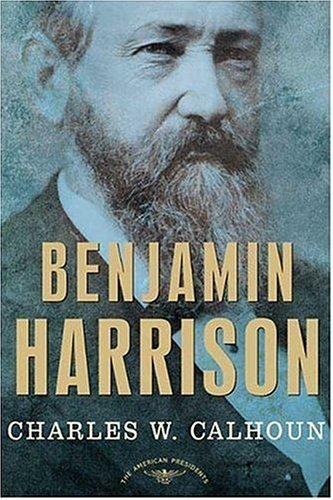
Benjamin Harrison 
by Charles W Calhoun. Times Books, 206 pages.

The latest in my ongoing effort to study America through the lens of presidential biographies, Charles W. Calhoun's Benjamin Harrison manages the amazing act of being as informative as a Wikipedia article without actually revealing all that much about its subject. This may be a result of the scope of the book - it's part of The American President's Series, edited by Arthur M. Schlessinger Jr, and it's probable that the author was working towards a specific word count. But whatever the reason, this is hardly the most comprehensive look at the life of the 23rd President (that honor resides with the 3 volume opus by Harry J. Sievers). This isn't necessarily a bad thing; but the book succeeds in revealing very little about Benjamin Harrison himself. This is a political biography, focused entirely on Harrison's professional actions, rather then his personal life. This sadly contradicts the aim of the American President series which, according to Mr. Schlessinger is to remind us of the humanity behind America's leaders.

Wednesday, November 9, 2011

Moneyball: The Art of Winning an Unfair Game
by Michael Lewis. W.W. Norton and Co. 286 pages.
vs.
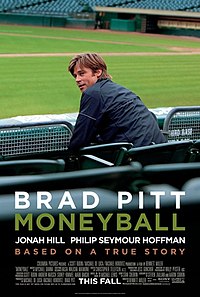
Moneyball
directed by Michael Bennett. Columbia Pictures. 133 min.

Comparing a book to its filmed version is a dangerous pastime: cinema and print are two different mediums and require different storytelling skills. One is visual, the other cerebral. Those that realize this invariably make good films - they steal the book's plot and maybe some of the dialogue, but otherwise they're wise enough to leave the book on the shelf. Moneyball is one such film. Written by Steven Zallian and Aaron Sorkin, Moneyball the movie is a taut character drama of a man against the world. Michael Lewis' book, on the other hand, is a far more complex expose of baseball's underworld and the personas behind both the players and those who put them on the film. Book and film are two different entities that have sprung from the same tree: the closest analogy one could give is that they are a pair of successful fraternal twins.

Saturday, November 5, 2011

Saturday by Ian McEwan.
Jonathan Cape, 279 pages.   

Ian McEwan has made a career putting the literary in literary fiction, but with Saturday he outdoes even himself. A novel that manages to be both dense and quiet, Saturday takes us slowly - very slowly - through a day in the life neurosurgeon Henry Perowne, allowing Mr. McEwan to revel in the mundane. Even the act of urinating deserves a paragraph of its own, which may be all you need to know in order to decide if Saturday is for you. Make no mistake: this is an exquisite book that reveals both the poetry and the disquiet in he most mundane of things. But Mr. McEwan is in no hurry to get to his point. Like The Comfort of Strangers, a much earlier novel, this is a book which almost imperceptibly pushes its characters towards an unforseen and startling climax.

Saturday, October 29, 2011

The Mark of Zorro by Johnston McCulley 
(Audiobook) Read by B.J. Harrison. approx. 8 hours.

They definitely don't write them like this anymore. The Mark of Zorro may very well be the king of the popcorn novels, succeeding in being a witty, adventurous delight despite having absolutely no nutritional value. This isn't an insult: Johnston McCulley's original 1919 novel is as delicious as a well-made dessert, overflowing with chases on horesback, sword play, evil tyrants, noble theives and of course the requisite lovely senorita who manages to not always be the damsel in distress. It's given a spirited reading by B.J. Harrison, the chief cook and bottle washer over at thebestaudiobooks.com. Mr. Harrison, who has narrated over three dozen novels and short stories for his Classic Tales podcast, has outdone himself this time around: he gives both voice and character to McCulley's calvacade of characters, moving from lisping generals to languid nobles with impressive ease.

Monday, October 10, 2011

Grover Cleveland: A Study in Character
by Alyn Brodsky. St. Martin's Press, 485 pages.

When it comes to studying American presidents, there's nothing sexy about Grover Cleveland. Study Lincoln, you get the Civil War; study Nixon, you get Watergate. Study Grover Cleveland and you get tarriff battles and the repeal of the Sherman Silver Act. Not quite the stuff they make Hollywood movies about. Yet Alyn Brodsky's charming pro-Cleveland biography is out to argue that we should all be giving America'as 22nd / 24th President a lot more credit. To Mr. Brodsky, there is something sexy about Cleveland's presidency. "He insisted on doing what was morally expedient," writes Mr. Brodsky. "Even if by doing so...it meant placing his political career in jeopardy." This, according to Mr. Brodsky, made Cleveland a "political freak." Cleveland, in other words, is the epitome of the Hollywood president - moral, idealistic, incorruptible - the sort found in blockbusters and rarely in the White House.

Wednesday, September 28, 2011

Paris Was Yesterday
by Janet Flanner. Harvest / HBJ. 232 pages.

It's tempting to want to write about Janet Flanner the way she wrote about Paris, but I hope I'm wise enough to know that I'd die from the effort. Ms. Flanner's exquisite prose was a staple of the New Yorker for almost fifty years, writing dispatches from Paris that provided a glimpse into France's artistic, social and political scene. Paris Was Yesterday is a collection of these letters spanning most of the interwar years, from 1925 - 1939, and it's a work almost without peer. As a stylist, Janet Flanner is a marvel while her perceptive and wry take on all subjects, be it Ulysses or Hitler, makes for an engaging read.

Monday, September 26, 2011

State of Fear
by Michael Crichton, Harper Collins. 602 pages.

Is it possible that Michael Crichton, of all people, is this generation's George Bernard Shaw? It's not the most common comparison, but hear me out. Shaw was a social critic whose plays were written to discuss a particular social ill: prostitution (Mrs. Warren's Profession) or the exploitation of the underprivileged (Widower's House). At the same time, he wrote entertainments (he called them "Pleasent Plays"), some of which proved to be his most enduring work (see Pygmalion, the basis for My Fair Lady). Cut to Mr. Crichton who, like Shaw, isn't afraid to put his opinion in a preface or afterword. His canon is also a mixture of popular entertainments (Jurassic Park, The Great Train Robbery) mixed with books which have a more political purpose - abortion (A Case of Need), genetic engineering (Next) and, as is the case with State of Fear, global warming. To Mr. Crichton, global warming is a social ill that needs to be addressed: he is, at best, skeptical of the science behind climate change, a fact which made this book controversial after it's release in 2004 and continues to be touted by those who believe climate change to be a hoax.

Thursday, September 22, 2011

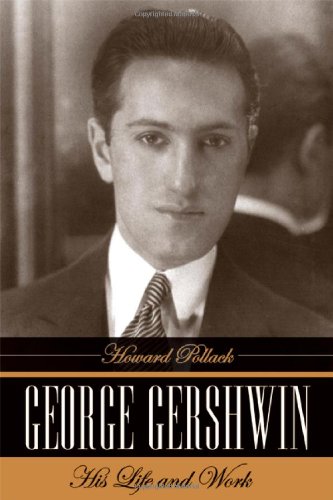
George Gershwin: His Life and Work
by Howard Pollack. University of California Press, 884 Pages (!!!)

Howard Pollack's enormous biography of American composer George Gershwin and his work might be better termed an encyclopedia: it not only dives into the composer's life, but also lists the history of his numerous songs, compositions and shows, complete with synopses, cast lists and four whole chapters (nearly 100 pages) devoted to the monumental Porgy and Bess. Having read almost every Gershwin biography to date, I can attest that Mr. Pollack's is both the most exhaustive and the least readable. It's a work of great significance and yet I would hardly recommend it to anyone but the most devoted Gershwin fan. Someone with a smattering of musicology would also be a plus, since Mr. Pollack isn't afraid to dive into the technical aspects of Gershwin's music, comparing individual pieces to other works in the Gershwin canon and Gershwin's contemporaries.

Wednesday, September 7, 2011

I Am Mary Dunne 
by Brian Moore. Penguin, 187 pages.

All literary affairs - like all love in general, I suppose - happen at different speeds. Sarah Vowell hit me like a ton of bricks, but Brian Moore came up quietly beside me, gently poking me in the ribs each time I walked into a book store. "Remember Brian Moore?" he says. "Remember how much you liked the last book?" And so I buy another of his books and then another. I Am Mary Dunne, written in 1968, is the sixth novel by Mr. Moore that I've read and I'm sorry to say that it's taken this long for me to realize that he and I are definitely having a literary affair. That Mary Dunne has cemented this realization is probably a testament to the book itself, which seems as quiet and unassuming as its title character. The book, like its heroine, is something easily passed by on your way to flashier things. But this would be a mistake, for both are filled with tragedy as heartbreaking as it is quiet.

Friday, September 2, 2011

Gentleman Boss: the Life of Chester A. Arthur
by Thomas Reeves. Knopf, 500 pages.

More an exhaustive overview of Gilded-Age U.S. politics then an actual biography, Gentleman Boss remains one of the few books to focus on America's forgotten 21rst president (he's so forgotten that he didn't even make it into the Simpson's classic "Mediocre Presidents" song). Chester "Chet" Arthur should have been an even more forgettable Vice-President, but Charles Guiteau changed that in 1881, killing President Garfield and altering Arthur's fate forever. Thomas Reeves makes a valiant effort to rehabilitate Arthur and for the most part he succeeds, although even he admits that Arthur might have achieved immortality if he had only been the bad President everyone expected him to me. Instead, he truly fulfilled the title of "caretaker President".

Monday, August 29, 2011

2030 by Albert Brooks
St Martin's Press, 375 pages.

It's too bad that the late Michael Crichton never got to write 2030, because in his hands it might have been a great book. Crichton was a genius at marrying an epic cast of characters with complicated exposition, all wrapped into a tense dramatic scenario - look at The Andromeda Strain, Jurassic Park or more recently, Next. Next (reviewed elsewhere) is perhaps the closest ancestor to 2030, as both take on clinical tones to discuss the not-so-distant future. But Next ends up being far more sinister in its implications. In the hands of filmmaker Albert Brooks, 2030 actually comes across as rather benign. Perhaps it's because the author's cinematic instincts are so much more honed then his literary ones: 2030 is dialogue heavy and the narration is short, brief and always to the point. Major events - earthquakes, deaths, China buying Los Angeles - all happen in the blink of an eye without any real attention paid to the drama of the moment. The entire novel reads like a treatment for a film that never got written.

Thursday, August 18, 2011

Various Positions
by Martha Schabas, Doubleday. 361 pages.

Being a former theatre school brat, I couldn't help but be drawn to Various Positions, an affecting first novel by Martha Schabas that deals with adolescence, broken homes and the fact that when you're dealing with the artistic world, the "rules do not apply". This, at least, is the conclusion reached by Georgia Slade, Ms. Schabas' engrossing main character, who is accepted to the Royal Toronto Ballet Academy and promptly begins both an artistic and sexual awakening. A bit of Black Swan meets Fame, Various Positions took me back to my own days in dance school and successfully captured the tense student rivalry and unfortunate eating disorders that are the undercurrent of any artistic training.